
The 3 Main Reasons Why Wall Failure Happens
The cause for wall failure is driven by an invisible force: pressure. The soil around your home puts a lot of pressure on your foundation walls, varying depending on the type of soil surrounding your home. When you think about it, there's nothing on the inside of the basement walls that's pushing back to counter that pressure.
So, let's break down the causes for this pressure and wall failure.
3 Causes of Wall Failure
Expansive Clay Soil
As moisture in the ground increases and decreases, clay expands and contracts. If you've ever looked at a dirt baseball field during a dry spell and noticed cracks in the dirt, this is because the clay soil shrinks when it's dry. However, when it's wet, the clay soil expands. This expansion can put a lot of pressure on your basement walls.
Frost
Especially for unheated basements, in cold climates, frost can put pressure on a wall and cause it to fail. Don't underestimate the ice! Frost forces can be extremely powerful. They can even lift shallow foundations up out of the ground, causing significant damage to the home.
Hydrostatic Pressure
This is not just another way of saying 'pressure'. Hydrostatic pressure is specifically the pressure exerted by a fluid due to the force of gravity. Simply, if water saturates the backfill soils around your foundation, the water will exert pressure against your walls.
Signs Of Potential Wall Failure
How do you know your basement walls might be at risk?
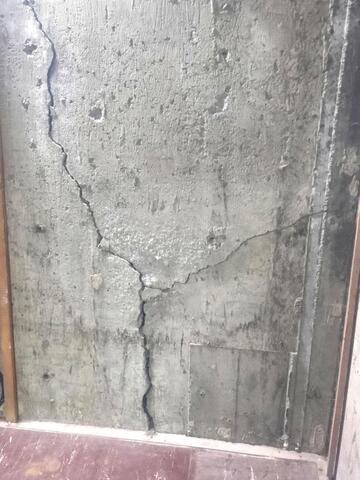
- For concrete block foundations, if there's horizontal cracking or stairstep cracking, this means that there may be bowing in your wall and you need foundation repair work done. Additionally, if there's pushing in at the bottom of the wall, or leaning in at the top of the wall, this means the framing of the home may be compromised.
- For poured concrete foundations, if you notice leaning in at the top of the wall or diagonal cracking at the corners, then your foundation will need repair work done. Poured concrete foundation walls are more likely to lean in at the top rather than bow near the middle.
If you have any questions or concerns about your home, don't hesitate to reach out to us! We'll send a System Design Specialist to take a look at your home, and provide a free inspection with a free estimate of work. Call us today!
